Part 2 — Will AI Save The Planet?
In the second part of this series, we explore how AI is being used to tackle climate challenges. From predicting floods and heatwaves to tracking deforestation and supporting endangered species, AI is contributing to climate and conservation efforts. But it’s not all rosy… or green.
I- AI & Environmental action.
1. Climate Sector Uses.
When it comes to monitoring the effects of climate change, AI is already being deployed across the environmental sector.
- Climate Modeling & Prediction: AI-enhanced models predict floods, droughts and heatwaves with growing accuracy.
- Example: DeepMind’s GraphCast forecasts global weather 10 days ahead, NASA uses ML to model climate systems.

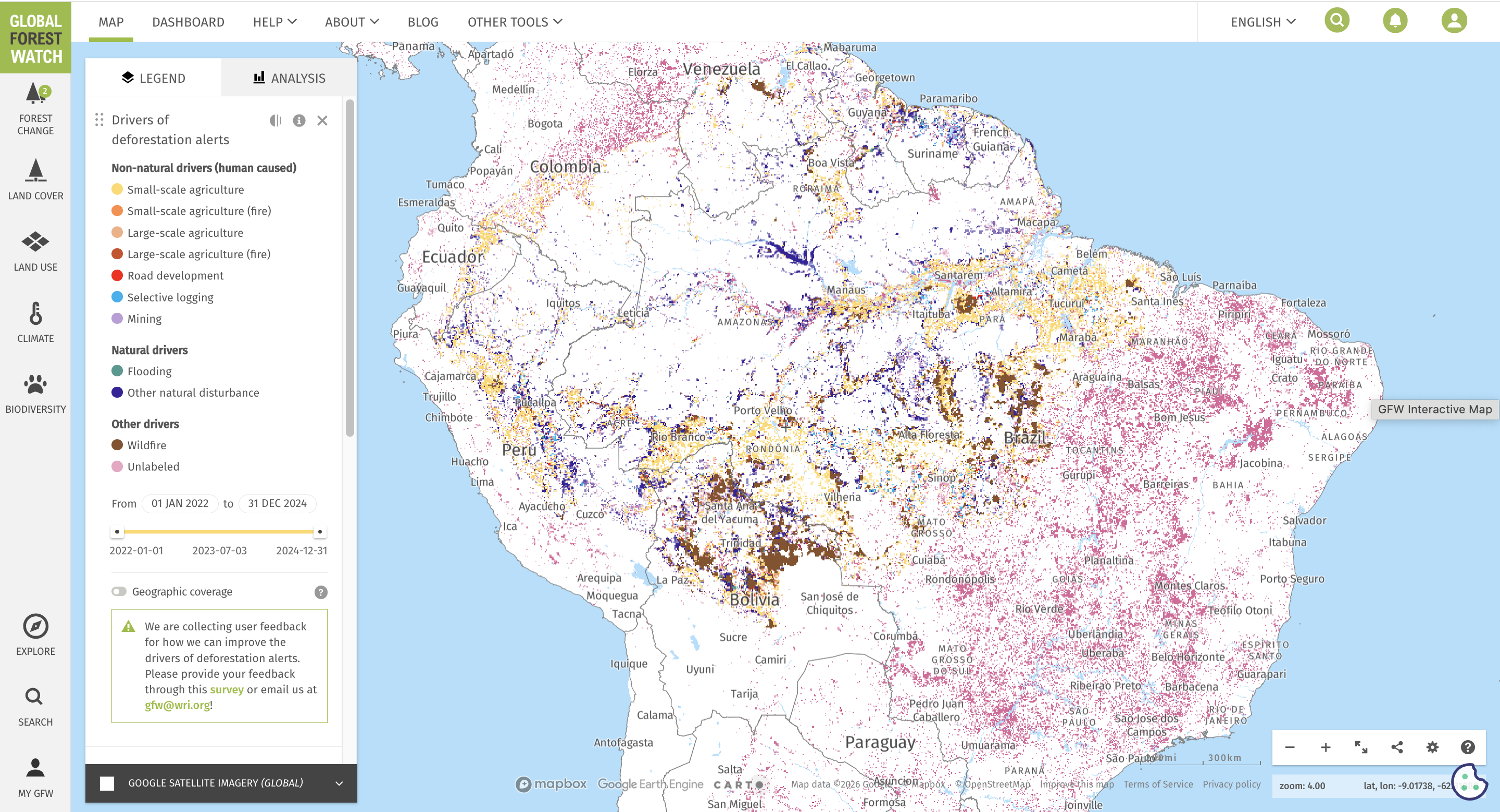
- Environmental Monitoring: Satellite imagery + computer vision detect illegal logging, mining, and biodiversity loss.
- Example: Global Forest Watch and Planet Labs use AI to track deforestation in real time.
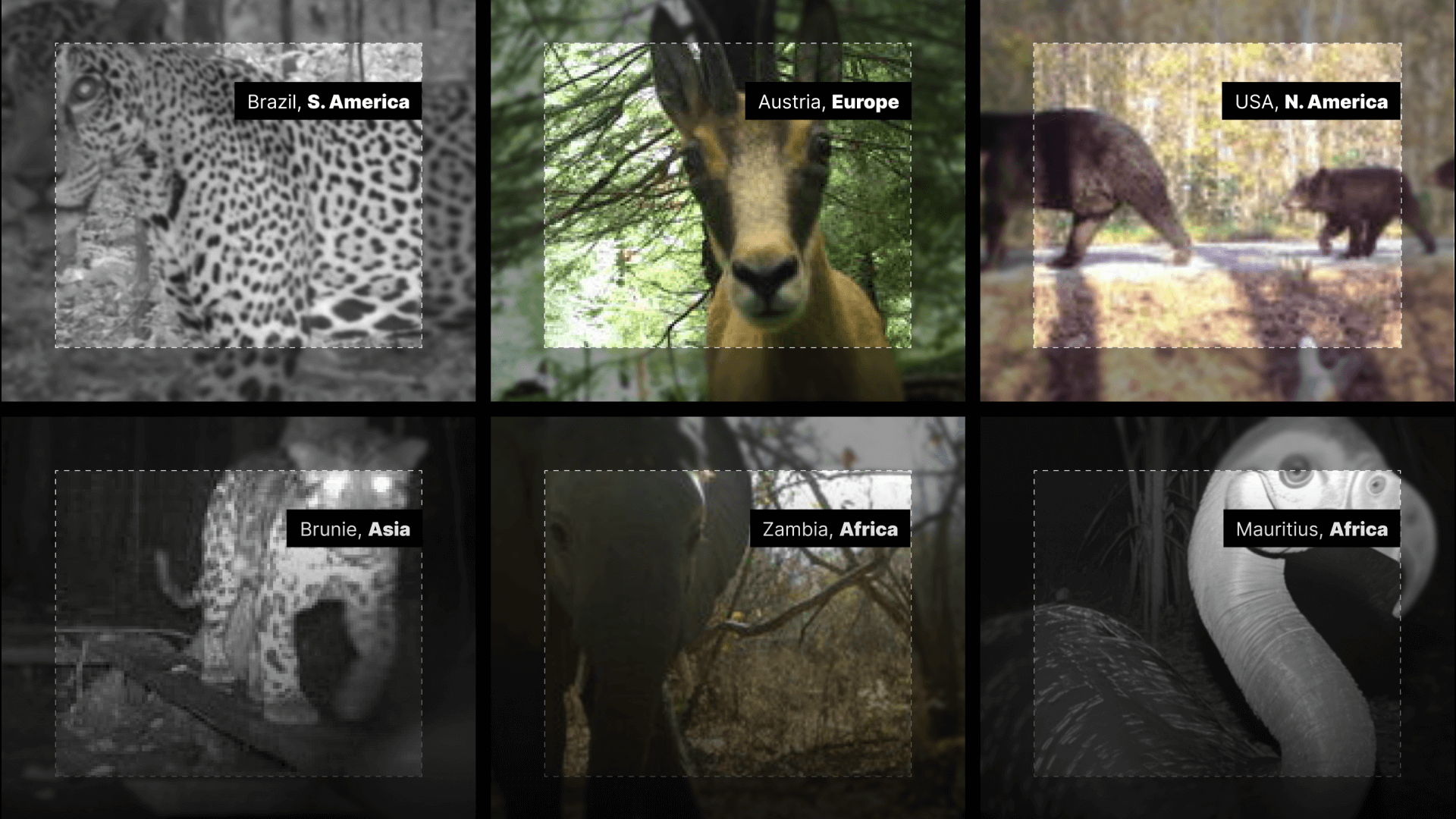
- Wildlife Conservation: AI-powered sensors and drones help rangers track endangered species and halt poaching.
- Example: PAWS by Harvard researchers or Wildlife Insights.
- Agriculture and Food Systems: AI is being used to optimize irrigation, fertilization, and pest control.
When it comes to measuring the impacts and the symptoms of the climate crisis, it seems AI could be useful. However, a foundational idea in the philosophy of technology highlights how difficult it is to understand a technology’s impact until it’s widely deployed, essentially telling us that every technology has unforeseen costs (The Collingridge dilemma, 1980).
So let's dive into the hidden costs of AI as a technology.
II - The environmental cost of AI
Today’s large AI models require huge amounts of electricity, strains local grids, and puts pressure on land and water resources — often affecting the communities living nearby.
1. AI, Data Centers & Fossil Fuels.
Training and running AI models requires round-the-clock electricity (that solar and wind alone can’t reliably provide right now). As a result, data-centre energy use is expected to rise, and US utilities are already delaying the retirement of fossil-fuel plants just to keep up.
According to MIT researchers US energy systems have already been reshaped by AI’s needs:
- Data centers consumed 200 TWh in 2024 → as much electricity as the entire nation of Thailand for a year.
- U.S. data-center demand may triple from 4.4 to 12% of national electricity between 2024–2028.
- AI alone could consume power equal to 22% of all U.S. households by 2028.
The IEA warns that global electricity use for AI could increase 10× by 2026, matching the annual consumption of Belgium.
.png)
2. Water Scarcity & Local Communities.
According to a January 2026 report by the United Nations, “the world has moved beyond a water crisis and into a state of global water bankruptcy,” with nearly three-quarters of the global population now living in countries classified as “water-insecure or critically water-insecure”. Against this backdrop, Generative AI’s environmental cost must also be understood in terms of water consumption.
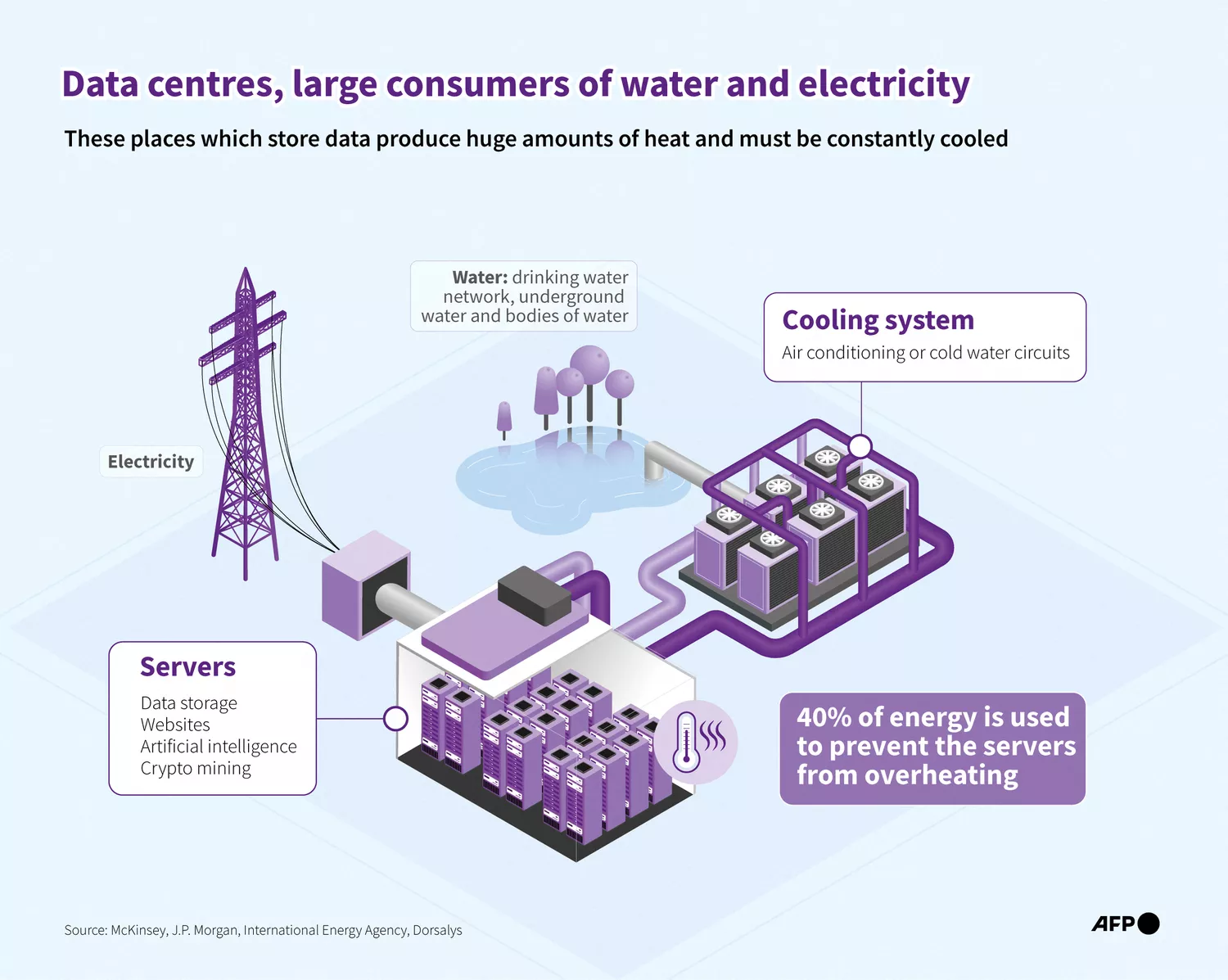
Large-scale data centers require millions of liters of water for cooling, often drawing from local public water supplies in regions already experiencing severe stress. As AI infrastructure expands, it increasingly competes with communities, agriculture, and ecosystems for access to a resource that is already critically scarce.
For example:
- Data centers are located in areas with dry climate: Arizona, Utah, Oregon, Colorado, Chile, Colombia.
- In some cases residents have reported facing reduced water availability or higher bills.
- Google’s total water use rose from 11.4B litres (2017) to 15.8B litres (2018) → a 39% increase.
“AI model training can lead to the evaporation of large volumes of freshwater for data center cooling, potentially worsening stress on already limited water resources.” - Harvard Business Review.
3. Corporate & technical opacity
AI’s rapid expansion is unfolding inside a system that remains deeply opaque, where data accuracy is hard to guarantee. First, because most companies withhold information, and second because the technology isn’t fully understood.
- Corporate opacity: Most AI companies release partial data about resource use, training, or performance data. Leaving communities with little insight into the realities they face.
- Example: Water-rights negotiations between tech giants and utilities are often hidden behind NDAs.
- Technical opacity: Even with full transparency, there remains an issue when tracing how an AI system moves from input to output.
- Example: We cannot predict social media bots’ influence on a network, because outcomes emerge from complex interactions with humans, other bots, and the environment.
"Without more disclosure from companies, it’s not just that we don’t have good estimates, we have little to go on at all" - MIT Technology Review
III. Key takeaways
AI as a technology can be used in the environmental space, but its players cannot claim it will “save the planet” without communicating exactly what it takes to build, train and run it.
- We need full transparency on AI's actual costs: energy consumption, water use, e-waste generation, and the burden placed on local communities' power grids and resources.
- AI companies must disclose the environmental impact of their models, from training to inference, so users, regulators, and communities can make informed decisions about AI deployment.
- Any environmental and climate benefits from AI must outweigh its footprint.
If AI is to play any meaningful role in fighting climate change, transparency, accountability, and environmental justice must come first.
Finally, just like any other technology, AI needs human labour and human-built infrastructure to run. In our final chapter, we turn to the human side of AI and the less visible, but deeply consequential ways AI , especially generative AI, affects how we think, work, and relate to each other.
References:
AI in Climate, Environment & Agriculture:
- DeepMind Weather Lab: https://deepmind.google.com/science/weatherlab
- NASA: https://www.nasa.gov/organizations/ocio/dt/ai/2024-ai-use-cases/
- Global Forest Watch: https://www.globalforestwatch.org/
- Planet Labs: https://www.planet.com/
- PAWS (Protection Assistant for Wildlife Security): https://seas.harvard.edu/news/2020/06/preventing-poaching
- Wildlife Insights: https://www.wildlifeinsights.org/
- IBM Watson Decision Platform for Agriculture: https://www.ibm.com/think/topics/ai-in-agriculture
- Transforming environmental science with the power of AI UKRI. (2024): https://www.ukri.org/who-we-are/how-we-are-doing/research-outcomes-and-impact/nerc/transforming-environmental-science-with-the-power-of-ai/
- Rahwan, I., Cebrian, M., Obradovich, N. et al. Machine behaviour. Nature 568, 477–486 (2019). https://doi.org/10.1038/s41586-019-1138-y
Energy, Emissions & Carbon Footprint:
- Carbon Emissions from Large Neural Network Training (GPT-3 reference) - Patterson, D. et al. (2021): https://arxiv.org/ftp/arxiv/papers/2104/2104.10350.pdf
- Estimating the Carbon Footprint of BLOOM, Luccioni, A.S. et al. (2022): https://www.jmlr.org/papers/v24/23-0069.html
- MIT Technology Review - AI’s Energy Footprint, O’Donnell, J. (2025): https://www.technologyreview.com/2025/05/20/1116327/ai-energy-usage-climate-footprint-big-tech/
- International Energy Agency - AI & Climate Change: https://www.iea.org/reports/energy-and-ai/ai-and-climate-change
- Bloomberg - Uncertainty in AI’s Energy Use, Saul, J. & Bass, D. (2023): https://www.bloomberg.com/news/articles/2023-03-09/how-much-energy-do-ai-and-chatgpt-use-no-one-knows-for-sure
- Google’s Carbon Emissions Surge (due to AI), Bartlett, K. (2024). CNBC: https://www.cnbc.com/2024/07/02/googles-carbon-emissions-surge-nearly-50percent-due-to-ai-energy-demand.html
- Futurism - AI Driving Coal Plants to Stay Online, Landymore, F. (2024): https://futurism.com/the-byte/coal-plants-ai
- Futurism - OpenAI Data Centers & NYC Power Use, Tangermann, V. (2025): https://futurism.com/artificial-intelligence/openai-new-data-centers-more-power-new-york-city
- Futurism - AI Electricity Use, Wilkins, J. (2025): https://futurism.com/ai-energy-use
Data Centers: Water, Siting & Social Impacts:
- Data Center Water Consumption, Mytton, D. (2021). npj Clean Water: https://doi.org/10.1038/s41545-021-00101-w
- Google Environmental Report (Water Use), Google. (2019): https://services.google.com/fh/files/misc/google_2019-environmental-report.pdf
- The Oregonian Exposé on Tech Water Use, Iruoma, K. (2024). The Reynolds Center: https://businessjournalism.org/2023/11/oregonian-data-centers/
- Data Center Activism Worldwide, Goodman, E. (2022). LSE Media@LSE: https://blogs.lse.ac.uk/medialse/2022/11/02/big-techs-new-headache-data-centre-activism-flourishes-across-the-world/
- Harvard Business Review - Uneven Distribution of AI’s Environmental Impacts, Ren, S., & Wierman, A. (2024): https://hbr.org/2024/07/the-uneven-distribution-of-ais-environmental-impacts
- Meta Built a Data Center Next Door. The Neighbors’ Water Taps Went Dry, Tan, E., & Chambers, D. (2025, July 16) - The New York Times: https://www.nytimes.com/2025/07/14/technology/meta-data-center-water.html
- Hayes, A. (2025, May 26). The hidden cost of AI: how data centers are draining water resources and what it means for investors. Investopedia. https://www.investopedia.com/how-data-centers-are-draining-water-resources-11738978
Critical Perspectives:
- AREJA, AI Accountability Network & Pulitzer Center (2024), From Hype to Reality: Critical Perspectives on AI: https://pulitzercenter.org/sites/default/files/2025-02/FromHypetoReality%20%281%29.pdf
- Forbes, Jones, H. (2024, August 1). Karen Hao empowers journalists to unravel AI’s complexities and impacts: https://www.forbes.com/sites/hessiejones/2024/07/25/karen-hao-empowers-journalists-to-unravel-ais-complexities-and-impacts/